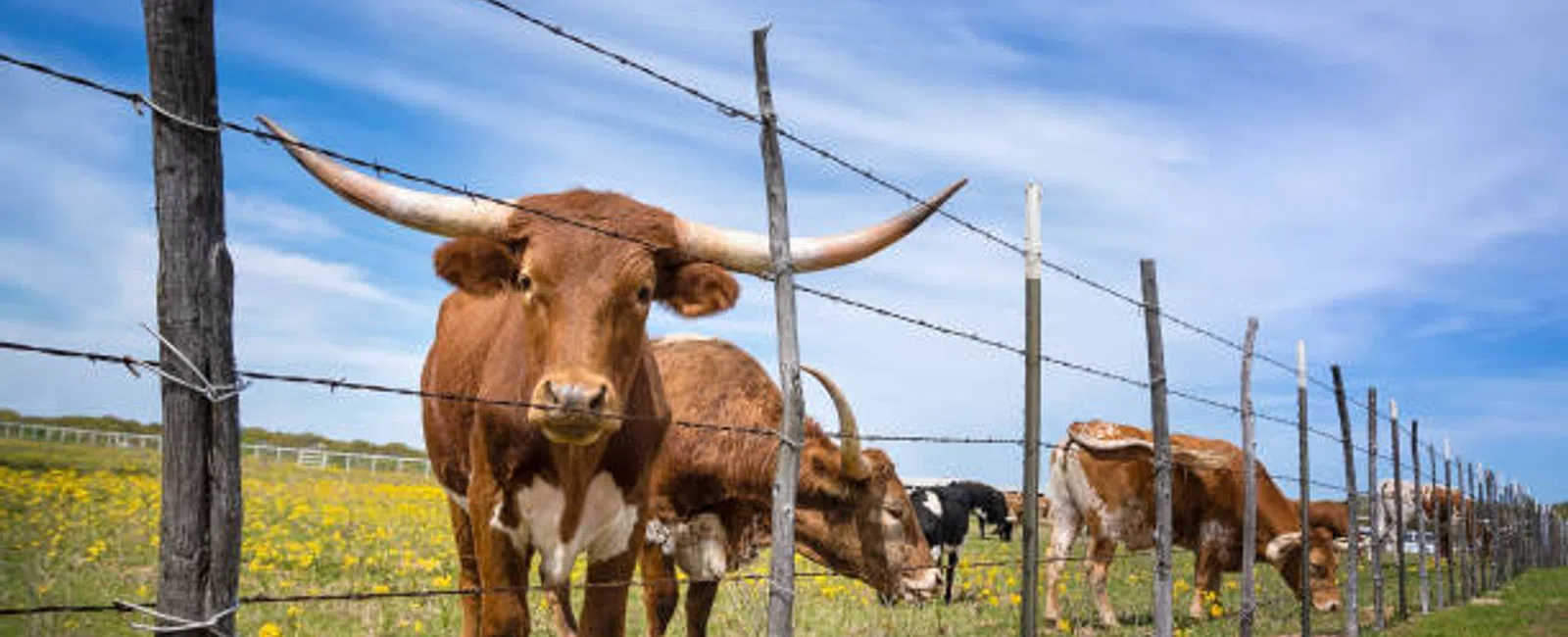
Post depth is not the only measurement that determines whether a fence holds up. The distance between posts along the line matters just as much. Space posts too far apart and the wire has nothing to keep it tight. Space them too close and a project runs longer and costs more than it needs to.
Why Post Spacing Matters On a Working Farm
Every wire fence relies on line posts to keep the wire at a consistent height and tension between the corners. The wire itself carries most of the load, but the posts are what keep it from sagging into an animal's reach or drooping low enough for a calf to step over.
Spacing is not a single fixed number. It changes based on the wire type, the animals being contained, and the ground the fence crosses. A layout that works well for high tensile wire on flat, open ground will not hold up the same way for woven wire crossing broken terrain.
Line Post Spacing By Fence Type
Different wire systems are engineered for different amounts of support between posts.
- High tensile smooth wire: Line posts are commonly spaced 20 to 30 feet apart. The wire itself carries most of the tension, so fewer posts are needed to keep it straight and tight.
- Woven wire and field fence: Line posts typically run closer together, often in the 12 to 16 foot range, with stay wires or droppers placed between posts to keep the mesh from bulging.
- Barbed wire: Traditional barbed wire fence usually needs posts spaced 8 to 12 feet apart, since the wire has less inherent strength than high tensile and depends more heavily on post support to stay straight.
These figures are starting points rather than fixed rules. A fence built for goats or hogs, which can push through gaps a cow would never attempt, often needs tighter spacing than a straightforward cattle perimeter.
What Determines the Right Spacing for a Given Line
A handful of factors shift spacing wider or tighter on any given run.
The animal being contained is the biggest factor. Cattle apply steady, predictable pressure and tolerate wider spacing. Horses and small ruminants test a fence differently and often call for a shorter interval between posts. Terrain plays a role too. A fence line that follows a straight, level field can run wider spacing than one that dips through a draw or climbs a slope, where extra posts help the wire follow the contour of the ground without losing tension at the low points.
Wire gauge and strand count also factor in. A heavier gauge wire under higher tension can span a longer distance between posts than a lighter wire strung with less pull. Wind exposure on open ridgeline pasture is another consideration, since a longer unsupported span gives the wire more room to move.
Stays and Droppers Between Line Posts
On woven wire and some high tensile layouts, stays or droppers are placed between the actual posts to hold the vertical wires at even intervals without adding a full post. This keeps material and labor costs down on high tensile runs while still preventing the wire from spreading or sagging between supports. Woven wire benefits from stays for the same reason, since a wide gap between posts without intermediate support lets the mesh bow outward under pressure from livestock.
Southwest Virginia Terrain and Spacing
Southwest Virginia's rolling and often rocky ground changes how a spacing plan plays out in the field. A layout drawn on paper with even 20 foot intervals rarely survives contact with the actual terrain. Low spots, rock outcrops, and grade changes usually call for adjusting individual post placements even when the overall spacing target stays the same.
Shallow bedrock is a common complication. When a planned post location hits rock close to the surface, the post sometimes has to shift a few feet in either direction to find soil deep enough to hold it, which can pull the spacing on either side out of an even pattern. This is a normal part of building fence on this ground rather than a sign of a poorly planned layout.
Signs a Fence Was Spaced Too Wide
A few patterns usually point back to spacing rather than depth or post condition.
- Wire that sags noticeably in the middle of a run between two posts that are otherwise solid
- Woven wire that bulges outward between posts under pressure from livestock
- A fence that held for the first year or two but has loosened steadily since
These problems are often mistaken for a tensioning issue, but re-tensioning a fence that is simply spaced too wide for its wire type tends to be a short-term fix rather than a lasting one.
Fence Layout and Installation in Southwest Virginia
Ranch Hand installs, repairs, and replaces working farm fence across Southwest Virginia, and lays out post spacing based on the wire type, the livestock being contained, and the terrain a fence line has to cross.
Contact Ranch Hand or call 276-739-8116 to have a fence line walked and laid out for your property.