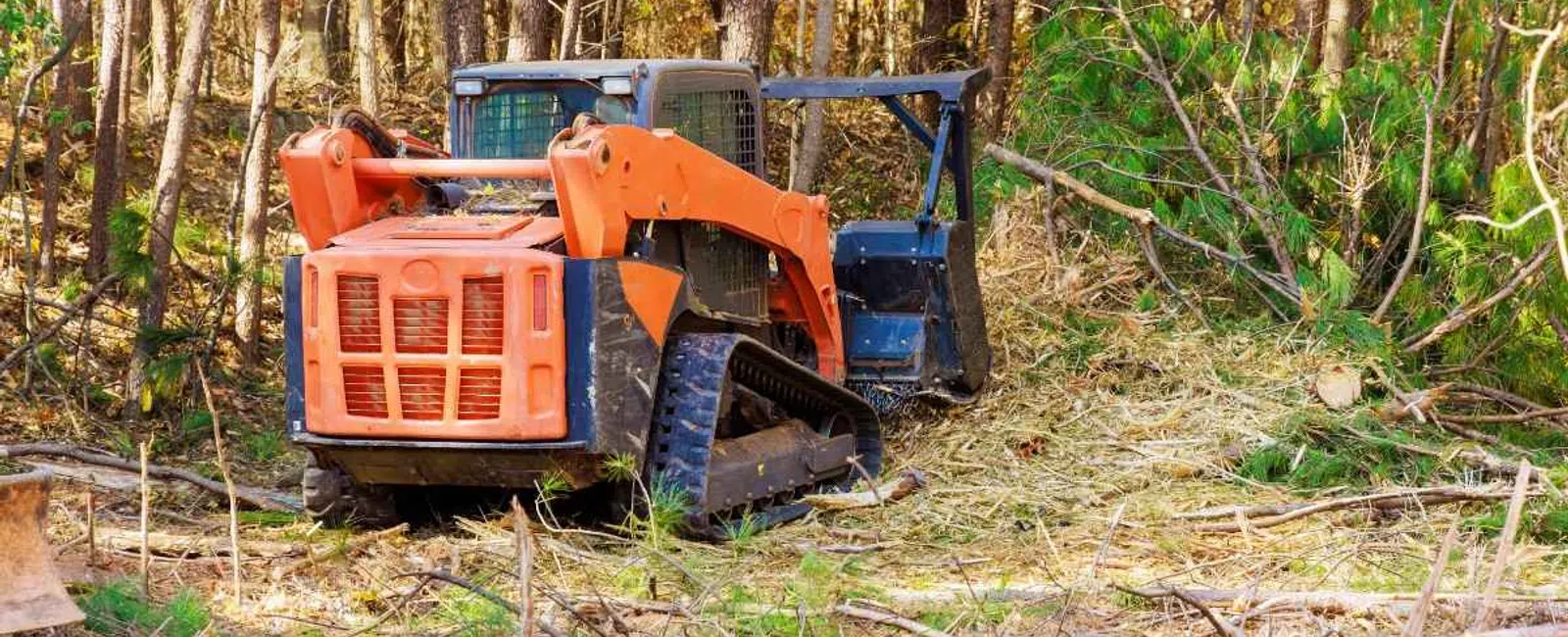
Lot clearing removes the brush, saplings, and small timber from a building site so the excavator, well driller, and septic installer can get to bare ground. On a wooded Southwest Virginia parcel, it is the first trade on the property and it sets the schedule for every trade behind it. A half-acre pad on a gentle slope can be cleared in a day. The same pad on a north-facing bank with a wet-weather spring in the middle takes longer and needs a different plan, which is why the crew walks the site before quoting.
What Lot Clearing Covers
Clearing a building lot is narrower than clearing acreage for pasture. The target is a defined footprint: the house or barn pad, the driveway corridor, the area where the septic field will go, and enough margin around the structure for the builder to work and for the county to approve setbacks. Everything outside that footprint stays standing unless the owner wants it opened up.
Inside the footprint, the work is brush and small timber. A forestry mulcher chews saplings, briars, honeysuckle, and multiflora rose into mulch that stays on the ground. A skid steer with a grapple pulls and stacks larger material. A brush hog handles open sections where the growth is grass, weeds, and whips rather than woody stems. The crew picks the combination based on what is growing and how steep the ground is.
The result is a site where a surveyor can see the pins, an excavator can see the grade, and the builder can stake the corners. Large trees above the size a mulcher or grapple handles, stump removal below grade, and cut-and-fill grading are excavation work, and they come after clearing rather than as part of it.
Reading a Southwest Virginia Building Site
Flat lots are rare between Abingdon and Wytheville. Most parcels fall off in at least one direction, and the slope decides how the clearing is done and where the pad can realistically sit. Equipment works across a hillside differently than it works up and down one, and a mulcher that is comfortable on a 15 percent grade is a different conversation at 30 percent.
Three site conditions change the plan more than anything else:
- Drainage. A seep, a wet-weather spring, or a swale that carries runoff after a storm needs to be identified before clearing starts, because mulching through it pushes debris into the channel and the excavator finds it later as a soft spot under the pad.
- Soil and rock. Shallow soil over shale or limestone shows up as thin, scrubby growth and exposed ledge. It affects what can be grubbed out, where a driveway can be cut, and what the septic contractor will be able to do with the field.
- Access. The driveway corridor is usually cleared first so equipment can reach the pad without tracking across the neighbor's land or tearing up a creek crossing. Culverts and gravel come after the corridor is open.
The initial walk covers all three. It also catches the things a plat does not show, like a fence line that is 20 feet off the surveyed boundary, a dead ash that will come down on its own schedule, or a power line easement that limits where the pad can go.
Clearing Ahead of the Builder
Builders and excavators schedule around clearing, and a site that is not ready on the day the dozer shows up costs a mobilization fee and a lost slot. The clearing crew needs to know the pad dimensions, the driveway route, and the septic field location before starting, and those come from the builder's site plan, the county's permit drawings, and the health department's septic approval.
Timing matters in this region. Clearing in late fall and winter, after leaf drop and before spring sap rise, gives the crew clear sightlines and firmer ground. Summer clearing works but takes longer in heavy growth, and clearing in a wet spring on clay soil leaves ruts that the excavator has to repair before grading. A site cleared in November is ready for the excavator when the ground firms up in March.
Mulched material left on the ground is normal on a lot clearing job and it protects the soil from washing before the excavator arrives. Builders who want a bare pad for layout can have the mulch pushed outside the footprint, and the margin between the structure and the woods benefits from it staying put.
Where Lot Clearing Stops and Excavation Starts
The two trades overlap at the edge of the pad, and owners sometimes expect one contractor to do both. Clearing brings the site to bare ground with the stumps of small material cut flush or mulched. Excavation removes large stumps below grade, strips topsoil, establishes the building pad elevation, cuts the driveway, digs the footers, and installs the culverts.
A clearing contractor who tries to grade with a skid steer leaves a pad that the footer crew has to fix. An excavator who clears heavy brush with a dozer blade pushes soil, roots, and debris into a pile that costs money to haul and leaves a rough site. Keeping the trades separate and sequenced produces a cleaner pad, and the owner knows exactly who is responsible for what.
Ranch Hand clears the lot and works with the owner's excavator on the handoff. On jobs where the owner has not yet hired an excavator, the clearing walk is a good time to settle the pad location and driveway route, because moving either one after clearing means clearing again.
Lot Clearing Across Southwest Virginia
Ranch Hand clears brush, overgrowth, and small timber for building sites, barn pads, and driveway corridors in Washington, Smyth, Russell, and Wythe counties and the surrounding area. Every job starts with a site walk and a written quote. Call 276-739-8116 or request a quote with the parcel location and the builder's site plan, and the crew will walk it and lay out what the clearing will involve.