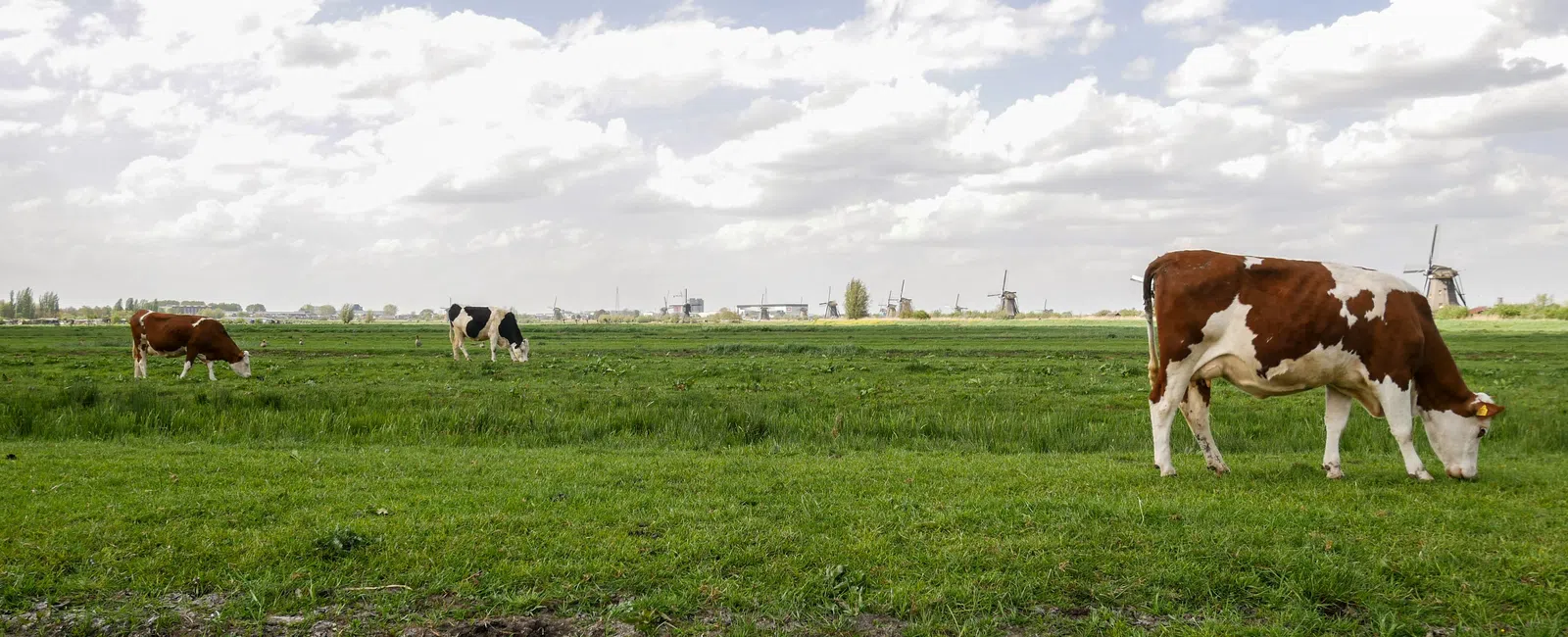
How many acres per cow depends mostly on how much grass your land grows. In high-rainfall country with well-kept pasture, a common starting figure is 1.5 to 2 acres per cow-calf pair for the grazing season. That doesn't cover winter, which needs more ground for hay or a stockpile. Dry western range can take 10 to 30 acres per pair or more. Treat any rule of thumb as a starting point. Watch the grass through a full year, because pasture that's overstocked thins out, fills with weeds, and carries fewer cattle every season after.
Why There Is No Single Number of Acres Per Cow
A cow doesn't need acres. She needs forage, and acres are just where the forage grows. Two 20-acre farms a few miles apart can carry very different herds, depending on soil depth, slope, rainfall, grass species, fertility, and how much of the place has gone to brush.
That's why extension specialists talk about stocking rate instead of a flat acreage. Stocking rate is the number of animals on a given amount of land over a given time, matched to what that land actually produces. Get it right, and the pasture holds up year after year. Get it wrong, and you buy hay you didn't plan on, or the grass thins out from overgrazing.
How Many Acres Per Cow-Calf Pair in Different Conditions
The ranges below are planning figures, not promises. They assume grazing during the growing season, with hay or stockpiled forage carrying the herd through winter.
On productive, fertilized pasture in areas with good rainfall, rotational grazing can bring the figure close to 1 acre per pair during peak growth. Ordinary well-kept pasture in humid regions usually lands around 1.5 to 2 acres per pair. Pasture that's thin, steep, rocky, or half grown up in brush often needs 3 to 5 acres. In the arid West, it can run 10 to 30 acres or more per pair for a grazing season.
If you want to keep cattle on the same ground all twelve months and make your own hay, add the hay acres on top. A pair that grazes on 2 acres all summer may need another acre or more of hayfield to get through winter, depending on your hay yields and how long the cattle are fed.
How to Calculate Acres Per Cow for Your Own Pasture
You can rough out your own stocking rate with three numbers: how much the cow eats, how much your pasture grows, and how much of that growth the cattle can actually use.
Step 1: Estimate What the Cow Eats
A beef cow eats roughly 2.5 percent of her body weight in dry matter a day while she's nursing a calf, and a little less when she's dry. A 1,100-pound cow works out to about 27 pounds of dry matter a day, or close to 10,000 pounds a year. Her calf adds to that as it starts grazing.
Step 2: Estimate What Your Pasture Grows
Forage yield is the hardest number to pin down. Well-managed grass pasture in good rainfall country might grow 5,000 to 7,000 pounds of dry matter per acre per year. Worn-out, unfertilized, or brushy pasture can grow half that. Your county extension office or NRCS field office can help you estimate yields for your soils.
Step 3: Count Only the Grass the Cattle Can Use
Cattle can't eat everything that grows. Some of it gets trampled, fouled, or left so the plants can regrow. Most grazing plans count on cattle using about half of the season's growth.
Here is the math for that 1,100-pound cow on pasture that grows 6,000 pounds per acre. Half of 6,000 is 3,000 usable pounds per acre. Dividing 10,000 pounds by 3,000 gives about 3.3 acres to feed her for a full year from grazing and hay combined. Add her calf, and a pair lands closer to 4 acres on that ground. Larger cows push the number up, and better pasture brings it down.
Animal Units: Comparing Cows, Horses, and Other Livestock
Grazing plans use the animal unit to compare different livestock. One animal unit is a 1,000-pound cow with a young calf, eating about 26 pounds of dry matter a day. A 1,300-pound cow counts as roughly 1.3 animal units, so she needs about 30 percent more ground than the standard.
The same idea covers mixed herds. A mature horse is often counted around 1.25 animal units, and a ewe or doe around 0.2. Add up the animal units, and you can size pasture for the whole place instead of guessing species by species.
What Changes How Many Acres Per Cow You Need
Grazing management makes the biggest difference you can control. Cattle turned out on one big field all summer graze their favorite spots to the dirt and walk past the rest. Splitting that field into paddocks and moving the herd lets each section rest and regrow, which usually lets the same land carry more cattle. Rotation depends on cross fencing, so a well-built cattle fence usually comes before anything else in a grazing plan.
Brush is the second big factor. Every acre of multiflora rose, autumn olive, or cedar is an acre that grows no grass, even though you still pay taxes on it. Reclaiming grown-up ground is often cheaper than buying or renting more land. Our post on turning overgrown land into usable pasture covers what that work involves.
Weather sets the ceiling every year. A drought summer can cut forage growth in half, so a stocking rate that works in a wet year will overgraze in a dry one. Many cattle farmers stock for an average or below-average year and treat good years as a bonus, cutting extra hay or stockpiling grass for fall.
Water and winter feeding round out the picture. Cattle graze unevenly when water is far away, so a paddock with a water source in reach gets used more completely. In winter, feeding hay in one well-drained spot keeps the herd from pugging every pasture into mud. A solid barn lot or feeding area protects the grazing acres you're counting on next spring.
Signs You Have Too Many Cows Per Acre
The pasture shows overstocking before the cattle do. Grass grazed shorter than 3 or 4 inches recovers slowly, and if it stays that short, the stand thins out. Watch for bare ground spreading between plants, weeds like thistle and horse nettle moving in, and cattle crowding the fence line to reach grass on the other side.
Feeding hay well before your neighbors start is another sign. If you're opening round bales in August in a normal year, the pasture is carrying more than it grows.
The fix is either fewer cattle or more usable grass. Selling a few head is the quickest change. Over the longer term, rotational paddocks, clearing brush, soil testing, and regular pasture mowing all raise what each acre can carry.
Planning Pasture for a New Herd
If you're buying land or starting a herd, plan conservatively. Start with fewer cattle than your best estimate allows, watch how the pasture holds up through one full grazing season, and add head once you know what the ground produces. Overstocking a new place is easy, and bringing worn-out pasture back takes years.
Before the cattle arrive, walk the property and figure out how many acres are actually open, grazable grass. Brushy hollows and wooded slopes don't count until they're cleared. Check the perimeter fence too, since a fence that won't hold cattle makes every other number meaningless.
Ranch Hand Agricultural Services builds cattle fence and cross fencing, clears brush to open up grazing ground, and builds barn lots for winter feeding. We're a veteran-owned crew backed by a working livestock operation, so we look at a pasture the way a cattle farmer does. If you want more grass out of the acres you already have, call us at 276-739-8116 or request a quote online.