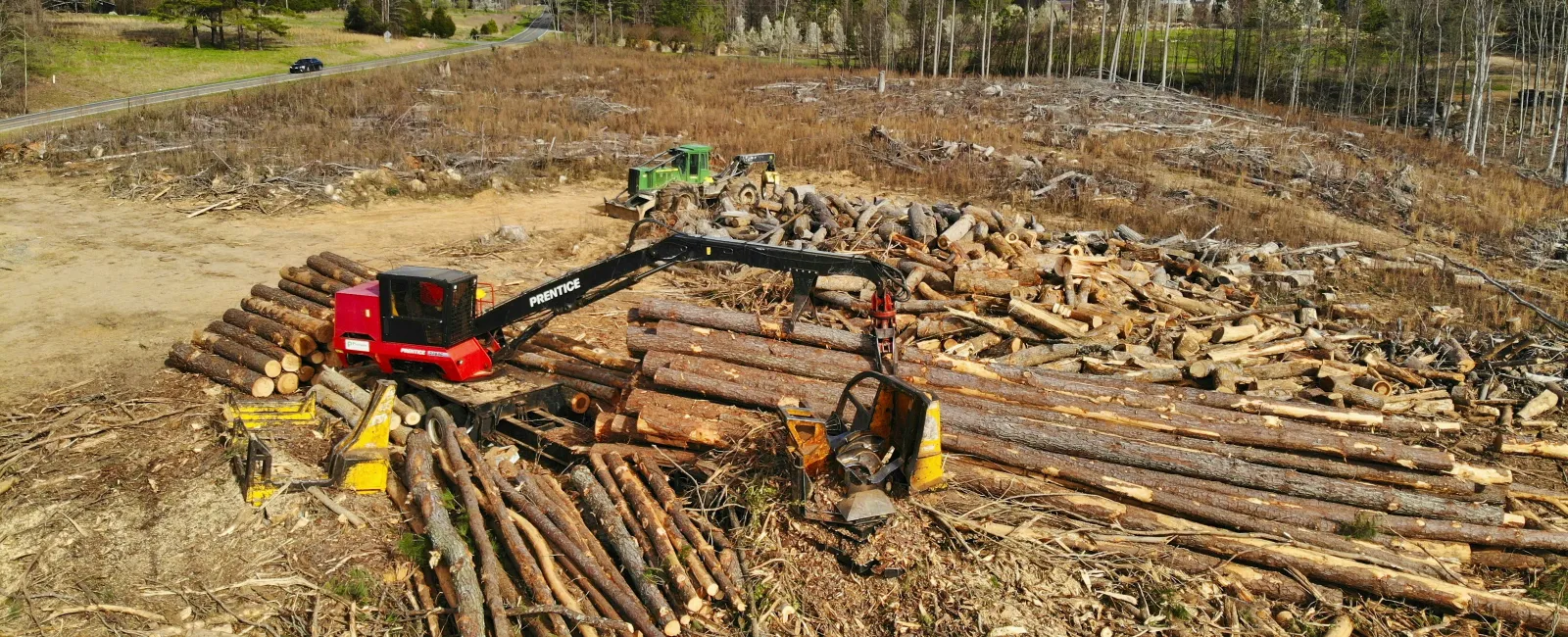
Most landowners around here do not think about land clearing until they have to. Then a fence line disappears under brush, a pasture grows up in cedars, or a new build needs a clean pad cut into the hillside, and suddenly it is the only thing on the to-do list.
What Land Clearing Actually Means
Land clearing is the process of removing trees, brush, stumps, rocks, and other obstacles from a piece of property so the ground can be used for something else. That something else might be pasture, a building site, a driveway, a food plot, a fence line, or just open, usable land.
A small job might mean knocking back five acres of overgrown brush so cattle can graze it again. A bigger one might mean a full clear and grade for a new shop, with stumps pulled, dirt moved, and the site ready for a slab.
Common Methods Used in Land Clearing
The right method depends on what is on the property, what you want to do with it afterward, and how much soil disturbance you can accept.
Forestry Mulching
A mulching head mounted on a skid steer or tracked carrier grinds standing trees, brush, and saplings into mulch right where they stand. No burn pile, no hauling, and the topsoil stays in place. Best for overgrown pasture, fence lines, trail cutting, and selective clearing where you want to keep certain trees standing.
Dozer Clearing
A bulldozer pushes trees, brush, and debris into piles for burning or hauling. This is the traditional approach and still the right call when you need stumps and root systems out of the ground or when the land needs to be reshaped afterward. It moves a lot of material quickly but disturbs the soil significantly.
Excavator Work
An excavator with a thumb or grapple is useful for selective tree removal, stump pulling, rock work, and cleaning up large debris. It pairs well with both mulching and dozer work depending on what the site needs.
Brush Hogging
For lighter overgrowth, grass, and small saplings, a brush hog behind a tractor handles it. This is maintenance-level clearing rather than full land clearing, but it is the right tool when the brush has not gotten ahead of you yet.
Burning and Hauling
After traditional clearing, the debris has to go somewhere. That means either burning on site, which requires the right conditions and sometimes a permit, or hauling it off the property entirely. Either way, it is part of the job that needs to be planned for upfront.
Most real jobs use some combination of these. Clearing an overgrown pasture for cattle might be mostly mulching with some brush hog follow-up. Prepping a new building site might be dozer work, excavator stump removal, and hauling. The crew you hire should be telling you which combination fits your property, not selling you whichever method they happen to specialize in.
What Affects a Land Clearing Job
Two five-acre properties can take very different amounts of work to clear.
- The type of vegetation. Light brush and grass clears fast. Mature hardwoods, dense thickets of multiflora rose, and tangled invasives take longer.
- The terrain. Flat ground is straightforward. Steep slopes, wet bottoms, and rocky ground require specific equipment and slower work.
- Access. A site you can drive equipment straight into is easier than one that requires building a temporary access path first.
- Stumps and root systems. Leaving them in the ground is faster. Pulling them takes more time and heavier equipment.
- What you want done with the debris. Mulching on site is the cleanest. Burning takes time. Hauling adds cost and trips.
- The end use of the land. A rough clear for pasture is different from a clean grade for a building pad.
A site walk is almost always required to give a real quote. Anyone giving you a firm price over the phone without seeing the property is guessing.
Common Reasons Landowners Clear Land in Southwest Virginia
Most of the land clearing work we do across the region falls into a handful of categories.
Pasture Reclamation
Old pasture that has grown up in cedars, blackberry, and autumn olive over years of being unused. The goal is to get it back to grazeable ground without destroying the topsoil.
Fence Line Clearing
Brush and tree growth along property lines and interior fences that needs to be removed so the fence can be inspected, repaired, or replaced.
Building Site Prep
Clearing and grading for a new home, cabin, barn, shop, or barn lot. This usually involves multiple methods and finishes with a clean, level pad.
Access Roads and Trails
Cutting a path for a driveway, a side-by-side trail, a logging road, or access to a back field.
Invasive Species Control
Removing established stands of multiflora rose, autumn olive, tree of heaven, honeysuckle, and other invasives that have taken over a section of property.
Storm Damage Cleanup
Removing downed trees, hangers, and broken limbs after a wind event or ice storm.
What to Look For When Hiring a Land Clearing Crew
- They walk the property before quoting. A real quote comes from a site visit, not a phone estimate.
- They ask what you plan to do with the land afterward. The plan should match the end use.
- They are clear about what is included and what is not. Hauling, burning, stump removal, and follow-up grading should all be spelled out.
- They have the right equipment for your job. A crew with only one machine type will try to make every job fit that machine.
- They tell you when their service is not the right fit. A crew that will turn down a job they are not the right fit for is a crew worth hiring.
- They are local and insured. References from other landowners in the area matter more than online reviews from out of state.
Ask for examples of similar jobs in your area. Anyone working in Southwest Virginia for any length of time should be able to show you properties they have cleared within a short drive of yours.
Land Clearing Services Across Southwest Virginia
Ranch Hand Agricultural Services is an Abingdon-based, veteran-owned, owner-operated company. We provide land clearing, fencing, barn lots, farm maintenance, and hauling for cattle farmers and landowners across Abingdon, Bristol, Chilhowie, Damascus, Glade Spring, Lebanon, Marion, Meadowview, Saltville, Wytheville, and the surrounding areas.
We are farmers ourselves, backed by HD Livestock. When we walk your property, we are thinking about how it will graze, how the fences will sit, and how the water moves through it. That perspective changes how we approach a clearing job, because we are planning for what the land needs to do after we leave, not just how to get the brush down today.
If you have ground that needs cleared, request a quote and we will come out, walk the property with you, and give you a straight answer on what the work involves and what it will take to get it done right.